

A LEGISLATIVE VICTORY FOR CHILD SAFETY IN GHANA: LADA INSTITUTE’S JOURNEY FROM POLICY PROPOSAL TO LEGAL REFORM
In February 2023, LADA Institute commenced advocacy efforts aimed at strengthening Ghana’s legislative framework for child safety in vehicles. With support from the Global Road Safety Partnership (GRSP), through the Bloomberg Philanthropies Initiative for Global Road Safety (BIGRS), the initiative achieved two main successes: an increase in the minimum permissible age for children occupying front passenger seats and introducing a legislative requirement for the use of Child Restraint Systems (CRS).
The Institute’s efforts were informed by significant gaps in the existing legal framework. At the time, Ghana’s regulations permitted children as young as five years old to occupy front passenger seats, a threshold that fell far below the internationally recommended minimum age of twelve years. In addition, there were no comprehensive legal provisions mandating the use of child restraint systems or other specific child safety measures in vehicles. As a result, many children travelled in vehicles without adequate protection, exposing them to heightened risks of injury or death in the event of road traffic crashes.
LADA Institute’s interventions aligned closely with the Government of Ghana’s ongoing efforts to review and amend the existing legislative framework governing road safety, particularly the Road Traffic Act, 2004 (Act 683) and the Road Traffic Regulations, 2012 (L.I. 2180). These reform efforts were initiated in 2021 by the Ministry of Transport and the National Road Safety Authority (NRSA) with the objective of updating Ghana’s road traffic laws to address emerging safety concerns and align them with international best practices.
Although the amendment process experienced several delays and periods of inactivity, the involvement of civil society organizations (CSOs) helped to sustain momentum and broaden stakeholder engagement. In 2023, CUTS International Accra, became the first GRSP-supported CSO in Ghana to formally engage in the legislative review process. This marked an important milestone in ensuring that the perspectives of non-state actors, particularly those advocating for vulnerable road users, were incorporated into Ghana’s reform agenda.
Building on the foundation laid by CUTS Accra, LADA Institute joined the legislative reform process.
From the outset, the Institute’s primary focus was on the amendment of the Road Traffic Regulations, 2012 (L.I. 2180), which was the immediate priority of the government. However, as the reform process evolved, it became increasingly apparent that some of the proposed changes to L.I. 2180 would require corresponding amendments to the parent legislation, the Road Traffic Act, 2004 (Act 683). This realization significantly expanded the scope of the advocacy effort. Consequently, LADA Institute shifted much of its focus towards developing legislative proposals for incorporation into the amendment of Act 683 and advocating for their adoption within the broader law reform process.
The Institute’s objectives were clear: build governmental and non-governmental support for reform, develop technically sound policy and legislative proposals, and increase stakeholder awareness and interest for child safety in vehicles. Yet, as with many legislative reform initiatives, the path to achieving these objectives was far from straightforward.
The experience reaffirmed an important lesson that has characterized much of LADA Institute’s policy and legislative work: meaningful legal reform requires more than sound technical proposals. It demands the careful cultivation of strategic partnerships, sustained stakeholder engagement, and the flexibility to adapt to evolving political and institutional realities. Navigating these complexities required persistence, collaboration, and, in this case, a commitment to ensuring that the safety and wellbeing of children remained at the centre of the reform agenda.
The reform effort hit a critical low in 2024 when public backlash over unrelated clauses in the amendment Bill, and election-year pressures, caused the legislation to stall. However, the process was revived when the new government’s transport reform agenda created a strategic window of opportunity for civil society, including LADA Institute, to successfully integrate their safety recommendations into the final Bill.
However, while stakeholder workshops provided a stable advocacy platform, the real advocacy progress occurred during behind-the-scenes engagements. LADA Institute’s expertise in legislative drafting and familiarity with the procedures acted as a game changer in the collaborative efforts. This expertise was made available to government stakeholders who also needed to navigate the law-making processes to ensure the passage of the legislation.
Today, the result of LADA Institute’s intervention is a landmark victory: the successful passage of the amendment to Act 683 and LI 2180. The new law, among other vital inclusions, significantly strengthened child safety by increasing the minimum age for children to sit in the front seat from five to 12 years. Furthermore, the legislation now mandates the use of child restraint systems that strictly adhere to the standard set by the Ghana Standards Authority (GSA). This win makes a significant contribution to Ghana’s national development, by reducing the economic burden of healthcare and lost productivity.
Written by: Shirley Haizel-Ferguson, Project Coordinator, Lada Institute

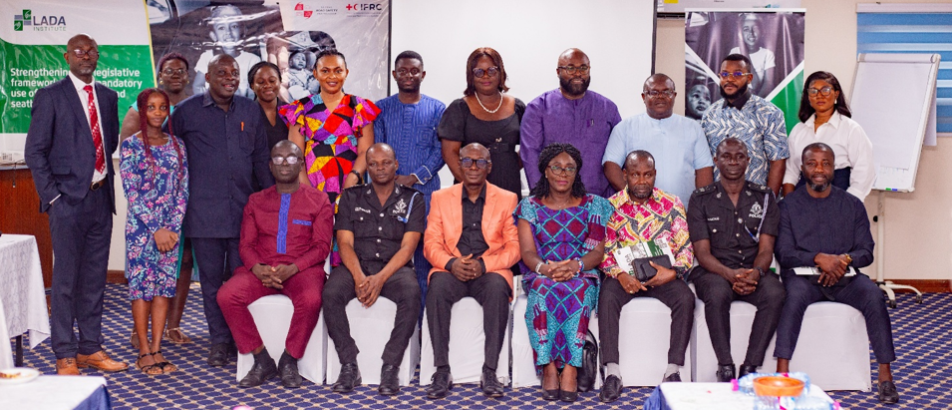
Figure 1: Key Government representatives across various ministries together with members of CSOs after a technical legislative workshop.