Building Road Safety Leadership Across Latin America: Inside the Fourth Road Safety Executive Leadership Course
Road crashes kill around 145 000 people per year in the Americas according to the World Health Organization. Vulnerable road users, including pedestrians, cyclists, and motorcyclists, account for an increasing share of these fatalities. To address this challenge, strong leadership in road safety is essential.
A Course Designed for Leaders in Road Safety
The Road Safety Executive Leadership Course (RSELC) is delivered by the Global Road Safety Leadership Institute (GRSLI) with funding from Bloomberg Philanthropies Initiative for Global Road Safety (BIGRS).
Designed specifically for senior government officials, the course recognises that road safety challenges are rarely solved through technical knowledge alone. Leaders must build coalitions, secure resources, navigate political realities, and translate evidence into action. The RSELC places strong emphasis on case studies, peer exchange, leadership discussions, and practical workshops.
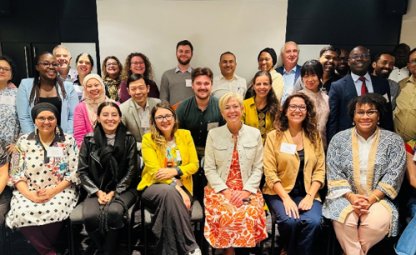
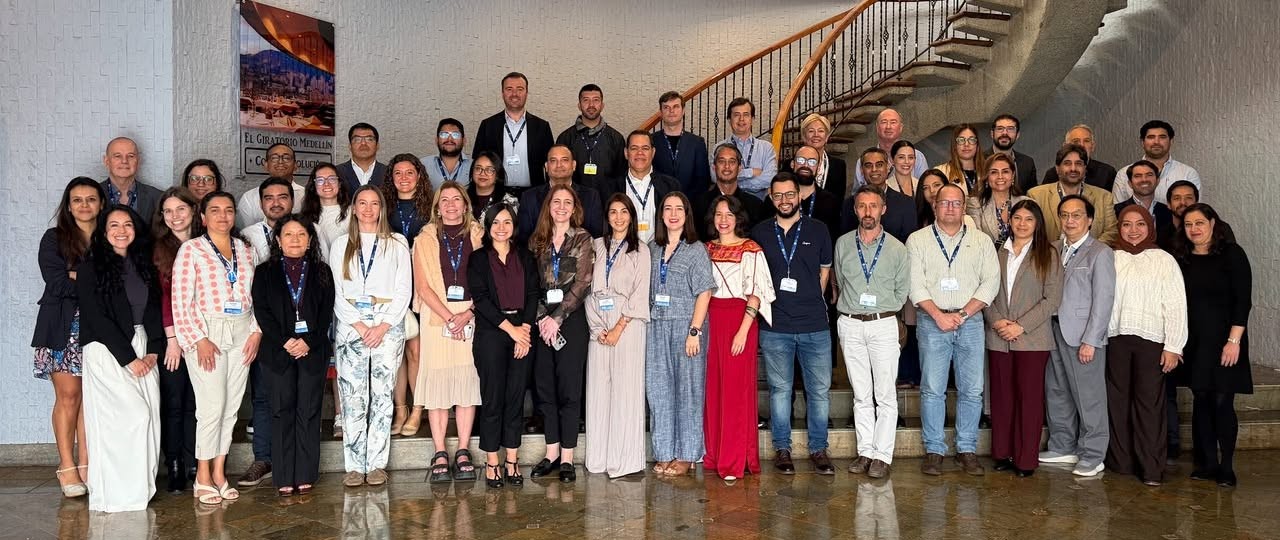
This year, the fourth (4th) RSELC cohort brought together 30 leaders from Argentina, Brazil, Colombia, the Dominican Republic, Ecuador, Mexico, Peru, and Uruguay. The participants came from national road safety agencies, ministries of transport and health, metropolitan authorities, city mobility departments, traffic enforcement agencies, public health institutions, and road safety observatories across Latin America.
Building a Common Foundation Online
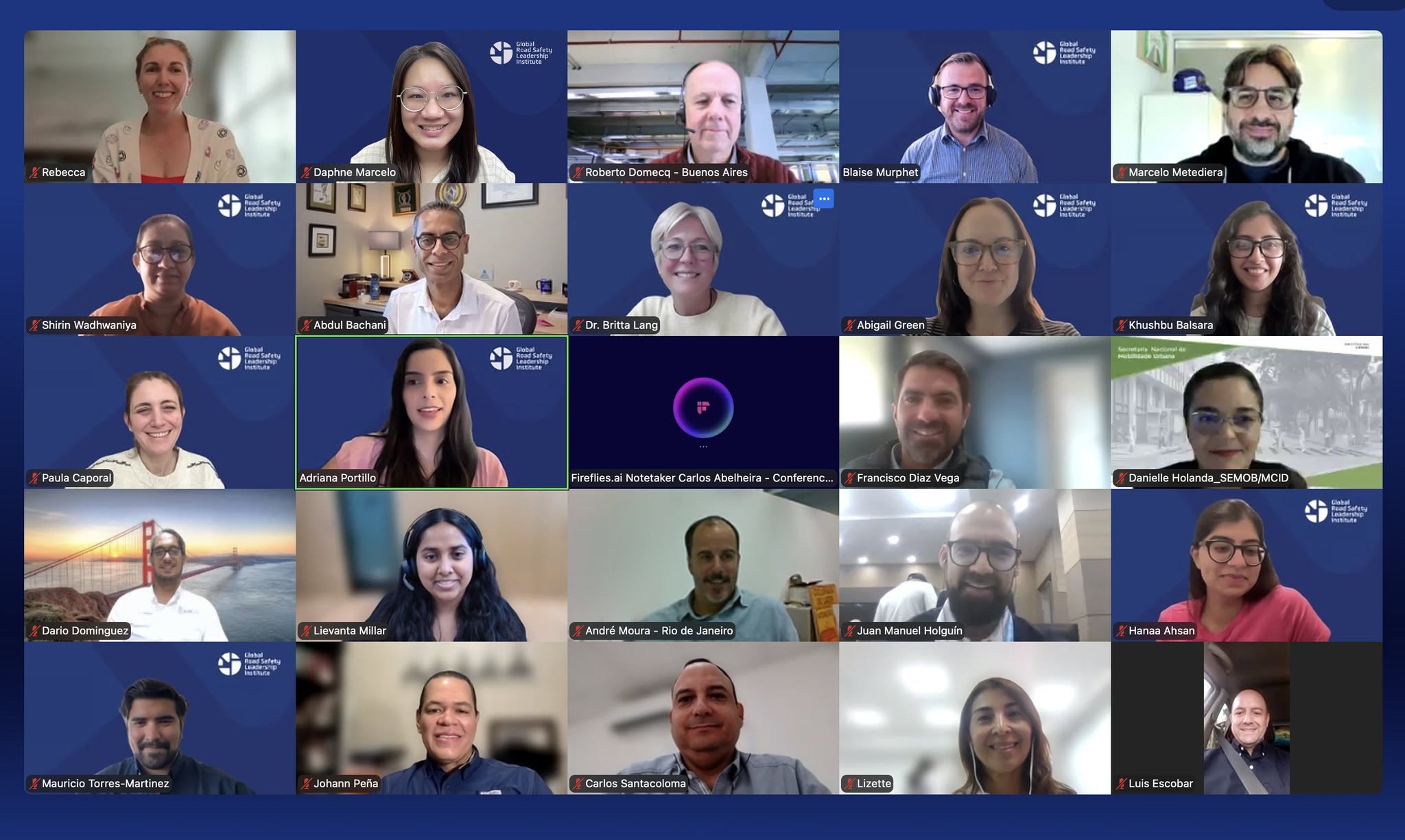
The journey of the 4th RSELC cohort began on 25 August with a month-long online phase. Through a combination of webinars and dedicated online modules, participants first examined the scale of road trauma and explored how road traffic injuries should be understood not as inevitable “accidents”, but as preventable failures within transport systems. Sessions then focused on the major risk factors contributing to crashes and injuries before introducing evidence-based approaches for improving road safety outcomes.
The course was formally opened by Dr Britta Lang (Global Road Safety Partnership (GRSP)) and Dr Abdulgafoor Bachani (Johns Hopkins International Injury Research Unit (JH-IIRU)), joined by Becky Bavinger and Lievanta Millar from Bloomberg Philanthropies, both alumni of previous GRSLI programmes.
From Online Learning to Leadership in Action in Medellín
From 19 to 23 October, the 4th RSELC cohort gathered in Medellín, Colombia, for the in-person phase. Against the backdrop of a city internationally recognised for its urban transformation, participants moved from building knowledge to strengthening leadership skills needed to deliver meaningful change for road safety.
Dr Britta Lang, Global Programme Manager of GRSP, reflected on the importance of moving from theory to practice: “The online phase provides participants with a foundation in road safety principles and evidence-based approaches. The in-person phase allows participants to test ideas, learn from one another’s experiences, and develop the leadership skills needed to turn knowledge into meaningful action.”
This focus on turning knowledge into action set the tone for the week ahead. Following opening discussions that challenged participants to consider the role of road safety in creating safer, healthier, and more liveable cities, the remainder of the programme addressed practical leadership approaches for improving road safety outcomes.
Participants explored a range of topics designed to strengthen both their technical understanding of road safety and their ability to lead change within complex environments. Faculty members and guest speakers from road safety funders and experts (listed below) from across the public health, transport, development, and advocacy presented on:
- Leadership and implementation, including how senior leaders can move from strategy to action, manage institutional challenges, and drive lasting change for road safety.
- Advocacy and partnerships, examining how leaders can strengthen collaboration across government, civil society, academia, and the private sector.
- Financing and resourcing road safety, with discussions on demonstrating impact, mobilising investment, and making the case for sustained funding.
- Data and evidence, focusing on how serious crash data and research can inform priorities, guide decision-making, and measure progress.
- Safe infrastructure and active mobility, including practical sessions on road assessments, speed management, and creating safer environments for vulnerable road users.
The programme drew on expertise from the World Health Organization (WHO), Pan American Health Organization (PAHO), Global Health Advocacy Incubator (GHAI), World Bank, Inter-American Development Bank (IDB), FIA Foundation, International Road Assessment Programme (iRAP), Global Designing Cities Initiative (GDCI), Aleatica Foundation, and Universidad de los Andes, alongside faculty and experts from course organizers JH-IIRU and GRSP.
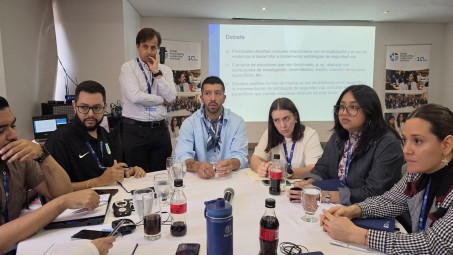
A field visit allowed participants to observe many of the concepts explored during the week in real-world settings across Medellín. Participants rotated through stations covering iRAP street assessments, vulnerable road user assessments led by the Global Designing Cities Initiative (GDCI), Johns Hopkins-led speed behaviour observations, and active mobility approaches.
Throughout the week, peer exchange remained central to the learning experience, allowing participants to share challenges, lessons, and solutions from across Latin America.
Dave Cliff, CEO of GRSP, reminded participants: “No one is coming to do this for you. You are the people in the position to act, mobilise resources, track progress, and, when necessary, adjust course to achieve results. And the results we’re talking about are fewer people killed and fewer living the consequences of serious injuries.”
Latin America Learning from Latin America
A defining feature of RSELC is the opportunity for participants to learn directly from one another. Throughout the week, leaders from across the region shared experiences of implementing road safety initiatives in complex political, institutional, and resource-constrained environments.
Insights from leaders across Latin America highlighted both shared challenges and innovative solutions. Participants learned from experiences including the implementation of road safety strategies in Bogota and broader urban mobility initiatives across the region. While contexts differed, common themes emerged: sustaining political commitment, securing resources, strengthening institutions, and translating plans into measurable results.
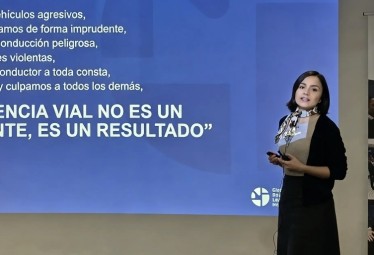
Claudia Diaz, former Secretary of Mobility, Bogota, Colombia share insights on implementing road safety strategies
Looking Ahead
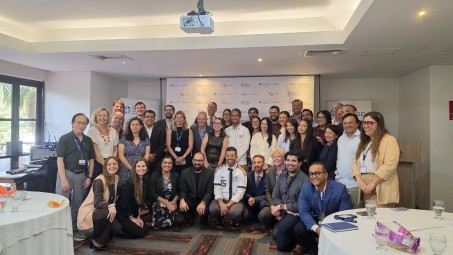
As the fourth RSELC came to a close, one message remained clear: road safety leadership is not defined by plans on paper, but by the ability to turn ambition into action. Participants left Medellín with strengthened leadership skills, practical implementation tools, and a growing network of peers committed to improving road safety across Latin America.
As participants return to their countries and cities, they do so with new perspectives, stronger connections, and a shared commitment to reducing road traffic deaths and injuries. Supported by a growing community of road safety leaders across Latin America, they are better equipped to turn ambition into action and create safer roads for everyone.
Latest news