South Africa Joins the Conversation: BIGRS Partners Chart the Way Forward on Road Safety Across Africa
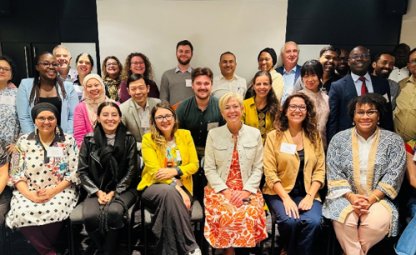
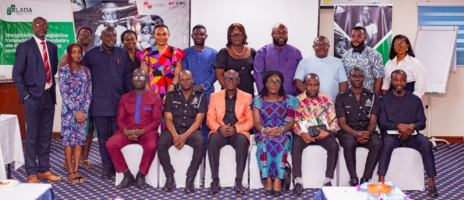
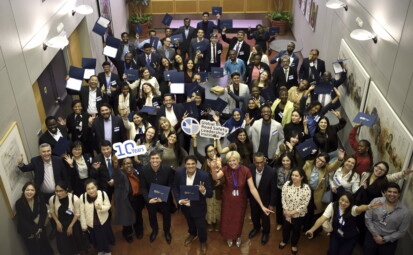
Cape Town, South Africa – 31 August 2026: Road safety policymakers, civil society leaders, researchers and GRSP grantees from Africa and beyond gathered in Cape Town for A Continental Conversation on Policy Gaps, Opportunities, and the Way Forward, a workshop held under the Bloomberg Philanthropies Initiative for Global Road Safety (BIGRS).
As South Africa joins BIGRS’s fourth phase, the gathering provided an opportunity for participants to exchange experiences, share lessons learned and strengthen partnerships across diverse road safety contexts and geographies.
Participants included representatives from Bloomberg Philanthropies, the World Health Organization (WHO), current and future BIGRS grantees, regional partners including the African Road Safety Observatory and the Sub-Saharan Africa Transport Policy Program (SSATP), as well as government and civil society stakeholders.
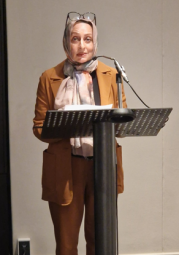
“South Africa continues to face a substantial road safety burden, although recent trends show encouraging signs of progress. The priority now is to build on this progress by targeting investment where it can have the greatest impact, particularly in pedestrian safety, through safer infrastructure, effective speed management and data-driven action in high-risk locations.” Dr Shenaaz El-Halabi
What is needed
The opening session examined South Africa’s road safety landscape and identified areas where further action could have the greatest impact. Dr Shenaaz El-Halabi, WHO Representative to South Africa, outlined the country’s road safety status and WHO’s commitment to supporting progress towards safer roads for all.
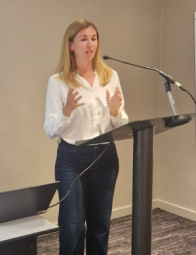
“We know what makes roads safer. The challenge now is turning that knowledge into policies and action that protect people every day. By bringing together civil society, governments, and road safety partners, we can learn from what has worked, strengthen collaboration and accelerate progress across Africa.” Becky Bavinger
Speaking on behalf of Bloomberg Philanthropies, Becky Bavinger emphasised that stronger collaboration among governments, civil society and road safety partners will be essential to accelerating progress across Africa, where the WHO reported a 17% rise in road traffic deaths in the decade to 2021.
Learning from the region and beyond
A panel discussion explored the policies, systems and leadership needed to address road safety challenges at the global level. Dr Britta Lang (GRSP) invited Dr Fangfang Luo (WHO) to share updates on global road safety trends and data before discussing their implications for vehicle safety with Alejandro Furas (Global NCAP) and governance with Dr Andrew Kiplagat (Kenya’s National Transport Safety Authority). Dr Kiplagat emphasised the importance of strong national leadership in bringing stakeholders together and driving accountability.
A second panel, moderated by Cristina Inclan (GRSP), showcased how global grantees are turning advocacy into action. Angela Amoroso (Tandem, Ecuador), Dr Yonas (Addis Ababa University, Ethiopia) and Dr Dhong Le (AIP Foundation, Vietnam) shared how their work had contributed to policy change in their respective countries. Their experiences demonstrated how locally driven advocacy can influence broader policy reform when supported by evidence, strategic partnerships and engagement with decision-makers.
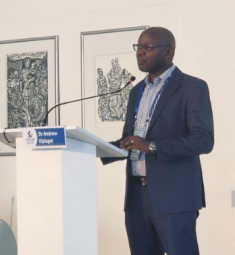
“Road safety is not won by isolated efforts; it is won by coordinated action. A strong lead agency, like NTSA, brings every actor to the same table, aligns the response, drives accountability and turns fragmented efforts into one powerful national road safety agenda.” Dr Andrew Kiplagat
World Café: Ideas from the room
Participants then took part in interactive discussions, rotating among four thematic tables focused on motorcycle safety, speed and infrastructure, strategic advocacy and communications, and sustaining advocacy momentum.
- Motorcycle safety : Facilitated by Wouter Van den Berghe (African Road Safety Observatory) and Marisela Ponce de Leon Valdes (Sub-Saharan Africa Transport Policy Program), this discussion explored opportunities to strengthen regional policy engagement, coordination and advocacy on motorcycle safety. Participants identified effective speed management and enforcement as key priorities, highlighting the need for clear speed regulations and consistent enforcement to reduce risks for motorcyclists and other road users. They also discussed how stronger regional coordination could help advance these priorities across countries.
- Safer speed and infrastructure : Facilitated by Jashwanth Tej (Global Designing Cities Initiative) and David Shelton (GRSP), participants examined opportunities to advance speed management policies and integrate road safety into infrastructure projects. Discussion participants emphasised the need to design roads and public spaces around people rather than solely around engineering requirements. They also called for a shift in planning and design approaches, supported by stronger capacity-building for engineers to incorporate road safety and the needs of vulnerable road users from the outset.
- Strategic advocacy and communications : Facilitated by Youth for Road Safety (YOURS) and Maria Nkalubo (GHAI), this session explored ways to shift the road safety narrative from individual responsibility to collective action and systemic policy change. Participants viewed communications as critical for building understanding, securing support and generating momentum for change. They highlighted the value of combining social media, digital and traditional media, policy briefs, stakeholder engagement and public campaigns to reach diverse audiences. Securing buy-in from policymakers, practitioners and other influential stakeholders was also seen as essential to creating shared ownership of road safety efforts.
- Sustaining advocacy momentum to support policy progress : Facilitated by Valentina Ochoa (GHAI) and Cristina Inclan (GRSP), this discussion focused on how advocacy efforts can maintain momentum and support long-term policy progress. Participants highlighted the importance of clear, practical and replicable frameworks that can be documented and transferred to new stakeholders. Such structures help preserve institutional knowledge, maintain relationships and ensure advocacy efforts continue despite changes in personnel or organisations.
Themes across the room
Roxanne Paisible (GHAI) summarised several common themes emerging from the discussions: the need to move beyond individual interventions towards systemic change; stronger coordination and stakeholder engagement; people-centred approaches; effective policy and enforcement; and frameworks that sustain progress over time.
Her reflections also highlighted the importance of embedding road safety within broader systems, including road design, speed management, communications and sustained advocacy efforts.
Supporting policy change through grants
Carmen Koo (GRSP) and Roxanne Paisible (GHAI) introduced the BIGRS Road Safety Grants Programme, which has delivered 242 grants through 25 competitive funding rounds, providing US$23.6 million to 147 organisations across 21 countries since 2012. Carmen also highlighted examples of grant-supported initiatives that contributed to policy and legislative advances, including new and amended road safety regulations in Uganda, Ethiopia and Ghana.
For participants exploring opportunities to contribute to road safety in South Africa, the session connected the day’s discussions with practical mechanisms for supporting evidence-based policy and advocacy initiatives.
Looking ahead
The workshop concluded with remarks from Daniel Checkol of Vital Strategies, who noted that progress in road safety depends on linking knowledge, policy, advocacy and implementation while building partnerships capable of sustaining these efforts over time.
For Cape Town, the workshop provided an opportunity to learn from partners working across countries and areas of expertise while building relationships to support future collaboration as the city begins its engagement with BIGRS.
The workshop reinforced a shared commitment to turning knowledge into action and advancing policies that save lives. The ideas, partnerships and lessons generated in Cape Town now provide a foundation for continued collaboration and progress across South Africa and the wider region.